Our knowledge base consolidates expertise on elastomers, composite parts and toolmaking. Here you’ll find precise information on materials, processes and applications - clearly explained and technically sound. It’s ideal for engineers, purchasers and anyone with a technical interest who wants to dive deeper into the world of rubber technology.
Choose Category
Shore hardness in elastomers
Shore hardness from the perspective of a rubber moulded parts manufacturer: definition, measuring principles and different Shore hardnesses
NR | Natural Rubber
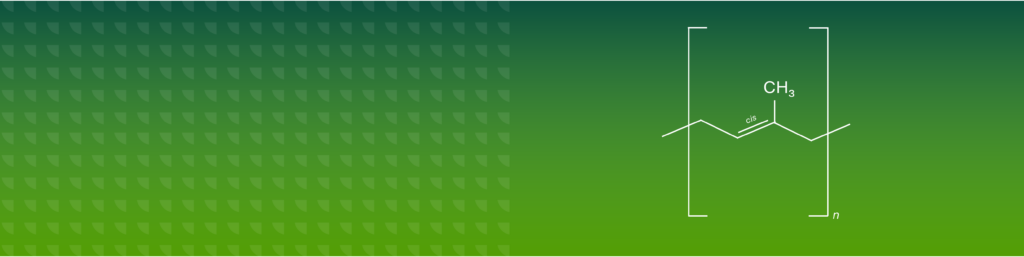
Natural rubber (NR) is a highly elastic elastomer derived from renewable resources, boasting high tensile strength, good dynamic properties, and low heat build-up and rolling resistance.
TPE | Thermoplastic Elastomers
Thermoplastic elastomers (TPEs) are plastics that behave like elastomers at room temperature but can be plastically deformed by the application of heat, allowing them to be processed like thermoplastics.
7 ways to seal an industrial enclosure
The sealing of an industrial enclosure is rarely given much attention – yet it is almost always one of the most critical aspects. Which sealing method is technically and economically sensible depends on the specific application.
Deflashing of rubber moulded parts
The removal of the burr can be done manually, thermomechanically, by friction, or tool-bound. If rubber is to be deburred, there are fundamentally four industrial methods from which to choose.
Tooling costs in the manufacture of rubber moulded and composite parts
Anyone involved in the production of elastomer moulded parts eventually faces a central question: What does the tool cost? The answer to this is rarely straightforward.
IIR | Isobutylene-Isoprene Rubber
Butyl rubber, chemically „isobutene-isoprene rubber“, abbreviated IIR, is a synthetic elastomer distinguished by its very low gas permeability and its resistance to oxygen, ozone, and many other chemicals.
FVMQ | Fluorovinylmethylsilicone rubber
FVMQ is a further development of classic silicone. Due to the structural change of the rubber with a fluorine group, fluorosilicone exhibits significantly better oil and fuel resistance while retaining the properties of standard silicone.
HNBR | Hydrogenated Nitrile Butadiene Rubber
HNBR (hydrogenated nitrile rubber) is characterised by its high resistance to temperature, oil and ageing. Overview of structure, properties & processing
VMQ | Vinyl-methyl-silicone rubber
VMQ (silicone) - material properties, terminology (MVQ, LSR, RTV, FVMQ), standards & guidelines, processing and material comparison
CNC milling and EDM
CNC milling and die-sinking EDM in toolmaking: Functionality, differences and interaction between the two processes and their influence on precision and quality.
Additives
Additives in elastomer compounds control processing, ageing resistance, cross-linking and functional properties. Overview of mechanisms of action, additive classes and technical classification.
Primer
How can rubber be bonded to a substrate (metal)? Basics, function and process reliability for primer application.
CR | Chloroprene
Chloroprene (CR): Properties, chemical structure, processing, relevant standards and material comparison with other synthetic rubbers explained in compact form.
NBR - Nitrile Butadiene Rubber
NBR (nitrile butadiene rubber) is an oil and fuel-resistant synthetic rubber characterised by good mechanical properties and high resistance to mineral oils.
FKM | Fluorocarbon rubber
FKM refers to fluorinated elastomers with a saturated polymer main chain. Overview of chemical structure, processing, standards and material comparison.
EPDM | Ethylene-Propylene-Diene Monomer
EPDM is a synthetic rubber based on ethylene-propylene. Overview of structure, properties, processing and categorisation in a material comparison.
BR | butadiene rubber
Butadiene Rubber: Properties, Benefits, Typical Applications, where BR excels and what it is used for - compactly summarized.
IR - Isoprene Rubber
Isoprene Rubber (IR): Quick check of Properties, Limitations and Common Fields of Application - explained in an easy-to-understand way.
SBR | Styrene-Butadiene Rubber
Styrene-Butadiene Rubber (SBR) is one of the most widely used synthetic rubbers worldwide. As a cost effective alternative to natural rubber, SBR combines good processing properties, high availability and abrasion resistance - a material with both history and future.
Compression moulding of rubber moulded parts
Operating principle, typical applications, material advantages, and tooling design – including temperature management & design considerations.
Injection moulding
Injection molding: short cycle times, high dimensional accuracy, and low material waste. Explore when this process excels over compression molding.
Transfer presses | Transfer moulding for elastomer parts
Operating principle, advantages, and differentiation from compression and injection molding.