

Natural rubber (NR) is a highly elastic elastomer derived from renewable resources, possessing high tensile strength, good dynamic properties, and low heat and rolling resistance. Without appropriate protective agents, NR's resistance to ageing and ozone is poor. NR is not resistant to mineral oils and greases, and is sensitive to ozone, UV radiation, strong acids, and oils.
1. What is natural rubber (NR)?
Definition of natural rubber (NR)
Natural rubber (English. Natural Rubber, NR) is obtained naturally. It is a high-polymer hydrocarbon rubber extracted from the latex of the rubber tree Hevea brasiliensis. Natural rubber is amorphous, has a low glass transition temperature and exhibits very high elasticity at room temperature, which is why it is used in natural rubber-based tyres, natural rubber seals and other dynamically stressed parts.
History of Natural Rubber (NR)
Indigenous cultures in the Amazon already used latex for balls and simple seals. The discovery of natural rubber by Europeans dates back to the voyages of discovery around the time of Columbus. In 1839, the American inventor Charles Goodyear developed vulcanisation in the USA, thereby creating a durable technical material (rubber) from soft, temperature-sensitive natural rubber, which is still a relevant basis for the rubber industry today. Since then, NR has been the basis for applications such as tyres, seals and technical moulded parts.
Chemical composition of natural rubber (NR)
Natural rubber is a polymer of the monomer isoprene (2-methyl-1,3-butadiene), which is present as a cis-1,4-polymer to over 99 %. The average molar mass is usually between 500,000 and 2 million g/mol. These very long, flexible molecular chains account for the material’s high elasticity. Natural latex also contains water, proteins, resins, fats and minerals, which must be largely removed or adjusted during further processing in order to improve curing and material properties. A characteristic feature of NR is strain-induced crystallisation (SIC): Under mechanical strain, the molecular chains arrange themselves into local crystalline structures, which significantly increases tear strength and tear propagation resistance; this arrangement reverts to its original state once the strain is removed.
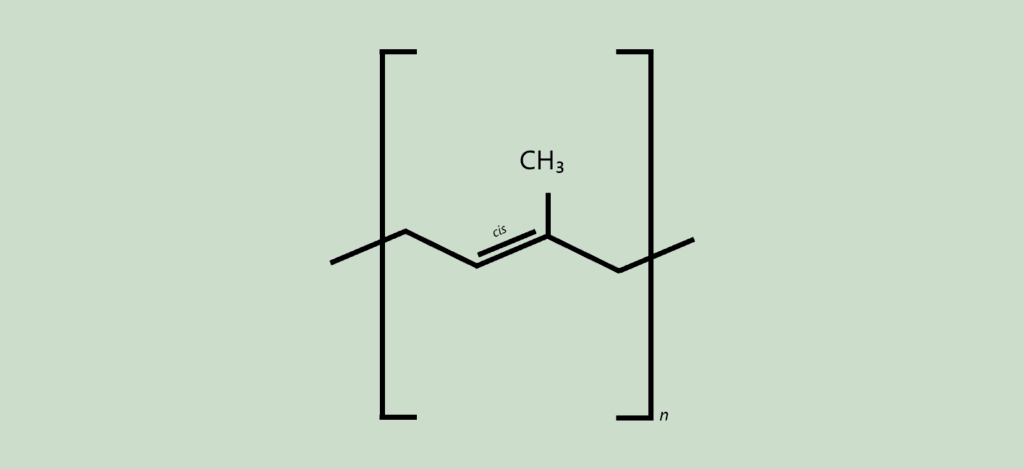
Figure 1: Chemical structure of natural rubber (NR)
2. Characteristics and properties of natural rubber (NR)
Chemical properties of NR
Natural rubber is an unsaturated polymer with many free double bonds in its main chain, making it highly reactive towards ozone, oxygen and UV radiation. Unvulcanised or unprotected NR parts therefore age relatively quickly and become brittle. NR is relatively resistant to many dilute acids and alkalis, but very sensitive to oils, greases and petrol. On contact with these non-polar media, NR swells and loses its mechanical properties. Therefore, anti-ozone and ageing protection agents (stabilisers, waxes) are required.
Mechanical Properties of NR
Vulcanised NR exhibits high tensile strength, very good elasticity and above-average dynamic properties. Typical tensile strengths of NR range between 15 and 35 MPa, depending on the compound formulation and processing. At the same time, NR exhibits high elongation (often over 500 %). NR also has very low thermal and rolling resistance, making it suitable as a base material for tyres – although it has limited abrasion resistance compared with certain synthetic rubbers such as SBR or EPDM.
Physical Properties of NR
Elastomers are used in the rubbery elastic region above their glass transition temperature (Tg). Below the Tg, they become very brittle. The Tg of NR is approximately -63 °C (DSC, midpoint, 2nd heating). Due to this low Tg, NR retains its elasticity down to about -50 °C and exhibits very good flexibility at low temperatures. At temperatures above 80–100 °C, NR loses its mechanical strength. NR is water-repellent and shows limited damping properties, which is why other elastomers are often combined or fillers such as carbon black or silica are added. The specific gravity of pure rubber is 0.91 g/cm³; technical compounds are significantly higher due to fillers such as carbon black or chalk (typically 1.0–1.3 g/cm³).
3. Processing of natural rubber (NR)
Tapping of latex – Rubber tapping
The Hevea brasiliensis tree does not need to be felled to extract its latex. To do this, a flat, diagonal cut is made in the bark. This opens the latex vessels (milk tubes) and allows the latex to flow out. The liquid flows from the cut and is collected. After a few hours, the collected latex can be processed further. The process can be repeated regularly.
Vulcanisation of NR
For vulcanisation, the linear molecular chains in NR are cross-linked with each other via sulphur, creating mono- or polysulphide bridges, which enable a high tensile strength and elasticity of the material. The cross-linking density of the polymer chains is influenced by the amount of sulphur and the cure time. The cure time refers to the duration a mixture requires at a defined temperature to achieve the desired degree of cross-linking; it is usually determined using a rheometer (e.g. MDR). In addition to conventional vulcanisation via sulphur bridges, there are efficient (EV) and semi-efficient (SEV) systems which increase cross-linking density and improve resistance to heat and aging, but slightly increase rolling and heat build-up.
Technical processing of NR
Natural rubber is typically supplied as mill stock or latex and converted into the final material by mixing with fillers, plasticisers, protective agents and cross-linking agents. This processing takes place in mixing and rolling mills, followed by profiling (calender, extruder) and subsequent compression moulding or hot moulding vulcanisation. NR tends to have sticky surfaces and can be over-vulcanised if processed for too long or at uncontrolled temperatures.
4. Material comparison: Natural rubber versus other elastomers
NR is used in particular where repeated deformation, high resilience and low heat build-up are required. Typical applications include natural rubber seals, natural rubber vibration dampers and natural rubber diaphragms. Specialised tyres and components used in material handling systems are also frequently manufactured from natural rubber.
In terms of weather, ozone and ageing resistance, NR lags significantly behind EPDM. When in contact with oils, greases and fuels, NBR is the more robust choice compared to NR. SBR is similar to NR in terms of mechanical properties and is used as a more cost-effective alternative in tyre compounds, but often does not achieve the high tear strength and tear propagation resistance of NR. In cases of extreme chemical or thermal stress, FKM is usually used; it offers significantly higher resistance to temperature and media, but is considerably more expensive.
| Nature rubber |
Nitrile Rubber |
Styrene Butadiene Rubber |
Ethylene- Propylene diene Rubber |
||
| International abbreviation | NR | NBR | SBR | EPDM | |
| Hardness range (in Shore) | 25A–70D | 20A-75D | 20A-70D | 20A-95A | |
| Mechanical Properties for Room temperature |
Tear resistance | 4 | 3 | 3 | 3 |
| Elongation at break | 4 | 3 | 3 | 3 | |
| Rebound resilience | 4 | 2 | 3 | 3 | |
| Tear propagation resistance | 4 | 2 | 3 | 3 | |
| Abrasion resistance | 3 | 2 | 3 | 3 | |
| Compression set | at max. continuous operating temperature | 1 | 1 | 1 | 2 |
| at room temperature | 2 | 0 | 2 | 2 | |
| Thermal behaviour | Cooling behaviour (Tg) up to °C | -55 | -40 | -45 | -50 |
| Max. Continuous operating temperature up to °C | 70 | 110 | 90 | 130 | |
| Resistance to | Petrol | 1 | 2 | 1 | 1 |
| Mineral oil (at 100 °C) | 1 | 3 | 1 | 1 | |
| Acids (aqueous inorganic acids at RT) | 1 | 2 | 2 | 3 | |
| Alkalis (aqueous inorganic alkalis at RT) | 1 | 2 | 2 | 3 | |
| Water (at 100 °C, distilled) | 1 | 2 | 2 | 3 | |
| Weather and ozone | 1 | 2 | 1 | 3 | |
Table 1: Material comparison of NR with comparable elastomers
Due to its relatively high reactivity with oxygen, natural rubber is highly flammable. NR is relatively unaffected by contact with water; however, hot water, steam and significantly fluctuating temperature conditions can significantly impair the durability of NR. For continuous contact with drinking water or systems with stringent hygiene requirements, materials with explicit approval are therefore often selected. In the case of food contact and biocompatibility, the suitability of NR depends heavily on its composition, as well as on the additives, vulcanisation systems and extraction processes used – rather than on the natural rubber itself.
Natural rubber is often unsuitable for medical purposes due to the allergenic proteins it contains. These proteins can trigger Type 1 immediate-type allergies (IgE-mediated, ranging up to anaphylactic reactions) as well as Type 4 delayed-type allergies (contact allergies to vulcanisation chemicals) upon skin contact. In addition, irritant contact dermatitis may occur, irrespective of any allergies. In medical and food-related applications, therefore, latex-free or low-protein specifications, or alternative elastomers, are frequently used.
5. Relevant test standards
The following standards are particularly relevant for rubber compounds and components: DIN ISO 1817 (Resilience to liquids), DIN ISO 37 (Tensile strength, Elongation at break), DIN ISO 34-1 (Tear strength), DIN ISO 188 or DIN ISO 11346 (Heat ageing and service life prediction) and DIN ISO 1431-1 (Ozone resistance). Elastomers are often classified according to ASTM D2000 or the corresponding DIN-ISO series of standards.
6. Cost comparison of NR with other elastomers
In a cost comparison of various elastomers, NR is at the lower end of the scale, on a par with EPDM and NBR (cost factor x 1.0 for each). However, the price of the raw material is subject to fluctuations, as it depends on harvest yields and competition from synthetic rubbers, and in practice may be slightly lower or higher.
| Material | NR | EPDM | NBR | CR | TPE/TPU | Silicone (LSR) | Silicone (HTV) | HNBR | FKM |
|---|---|---|---|---|---|---|---|---|---|
| Cost factor | x 1,0 | x 1,0 | x 1,0 | x 1,2 | x 1,3 | x 1,4 | x 1,8 | x 2,9 | x 3,7 |
Table 2: Cost comparison of NR
7. Sustainability of Natural Rubber
The rubber tree captures CO2 during growth and is suitable for agroforestry systems that combine NR production with other agricultural uses. At the same time, large-scale rubber plantations, similar to palm oil plantations, are associated with the clearing of tropical forests and related supply chain risks. For B2B buyers with ESG requirements, proof of origin and certifications (e.g. FSC for plantation areas) are therefore increasingly relevant when sourcing NR.
8. Classification of natural rubber as a material
NR is well-suited for dynamic and mechanical stress, but is inferior to many synthetic elastomers in terms of chemical resistance, ageing stability and temperature range. The choice of material therefore depends heavily on the individual case: for requirements regarding media, ozone or temperature resistance, synthetic alternatives are usually used.
