

Synthetic rubber

Synthetic rubber is an uncrosslinked, plastically deformable polymer that is produced in chemical plants through the polymerization of monomers.
TPE vs. Rubber

When are thermoplastic elastomers the better choice than rubber? Advantages and disadvantages of TPE, comparison table and decision aid
TPU | Thermoplastic polyurethane

TPU is a thermoplastic elastomer based on segmented polyurethane block copolymers and is classified within the TPE materials as TPE-U.
Thermoplastics, elastomers & duroplastics

Thermoplastics, duroplastics and elastomers form the three groups of materials in polymers. They can be distinguished by their behavior when heated and their ability to return to their original shape after deformation.
NR | Natural Rubber
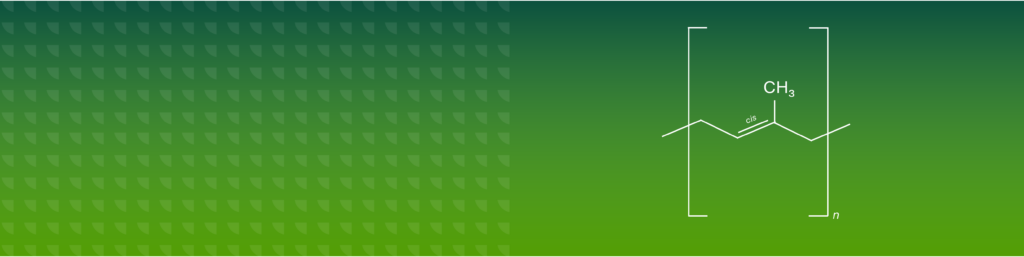
Natural rubber (NR) is a highly elastic elastomer derived from renewable resources, boasting high tensile strength, good dynamic properties, and low heat build-up and rolling resistance.
TPE | Thermoplastic Elastomers

Thermoplastic elastomers (TPEs) are plastics that behave like elastomers at room temperature but can be plastically deformed by the application of heat, allowing them to be processed like thermoplastics.
IIR | Isobutylene-Isoprene Rubber

Butyl rubber, chemically „isobutene-isoprene rubber“, abbreviated IIR, is a synthetic elastomer distinguished by its very low gas permeability and its resistance to oxygen, ozone, and many other chemicals.
FVMQ | Fluorovinylmethylsilicone rubber

FVMQ is a further development of classic silicone. Due to the structural change of the rubber with a fluorine group, fluorosilicone exhibits significantly better oil and fuel resistance while retaining the properties of standard silicone.
HNBR | Hydrogenated Nitrile Butadiene Rubber

HNBR (hydrogenated nitrile rubber) is characterised by its high resistance to temperature, oil and ageing. Overview of structure, properties & processing
VMQ | Vinyl-methyl-silicone rubber

VMQ (silicone) - material properties, terminology (MVQ, LSR, RTV, FVMQ), standards & guidelines, processing and material comparison
CR | Chloroprene

Chloroprene (CR): Properties, chemical structure, processing, relevant standards and material comparison with other synthetic rubbers explained in compact form.
NBR - Nitrile Butadiene Rubber

NBR (nitrile butadiene rubber) is an oil and fuel-resistant synthetic rubber characterised by good mechanical properties and high resistance to mineral oils.
FKM | Fluorocarbon rubber

FKM refers to fluorinated elastomers with a saturated polymer main chain. Overview of chemical structure, processing, standards and material comparison.
EPDM | Ethylene-Propylene-Diene Monomer

EPDM is a synthetic rubber based on ethylene-propylene. Overview of structure, properties, processing and categorisation in a material comparison.
SBR | Styrene-Butadiene Rubber

Styrene-Butadiene Rubber (SBR) is one of the most widely used synthetic rubbers worldwide. As a cost effective alternative to natural rubber, SBR combines good processing properties, high availability and abrasion resistance - a material with both history and future.
IR - Isoprene Rubber

Isoprene Rubber (IR): Quick check of Properties, Limitations and Common Fields of Application - explained in an easy-to-understand way.
BR | butadiene rubber

Butadiene Rubber: Properties, Benefits, Typical Applications, where BR excels and what it is used for - compactly summarized.
