
What is soft rubber?
Rubber is a rubber-elastic material that is produced by vulcanizing rubber and has a Polymer chains They are only loosely interconnected. Soft rubber can be strongly deformed and then returns to its original shape. In technical terms, the material is called an elastomer. The term „soft rubber“ distinguishes it from rigid hard rubber. The English term is “soft rubber”.
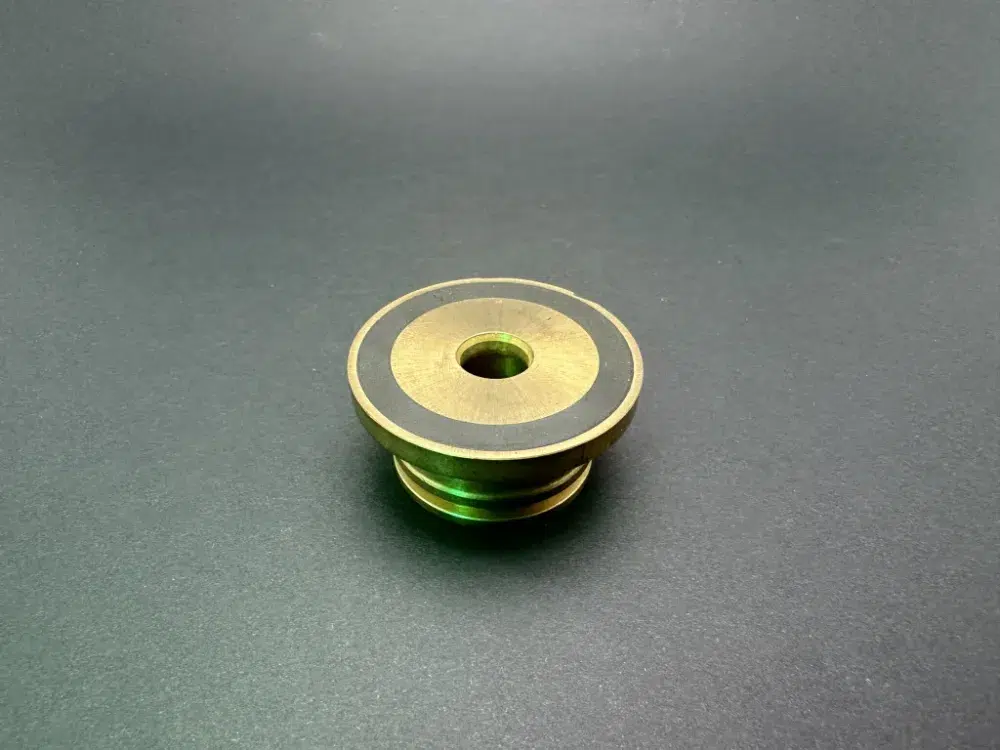
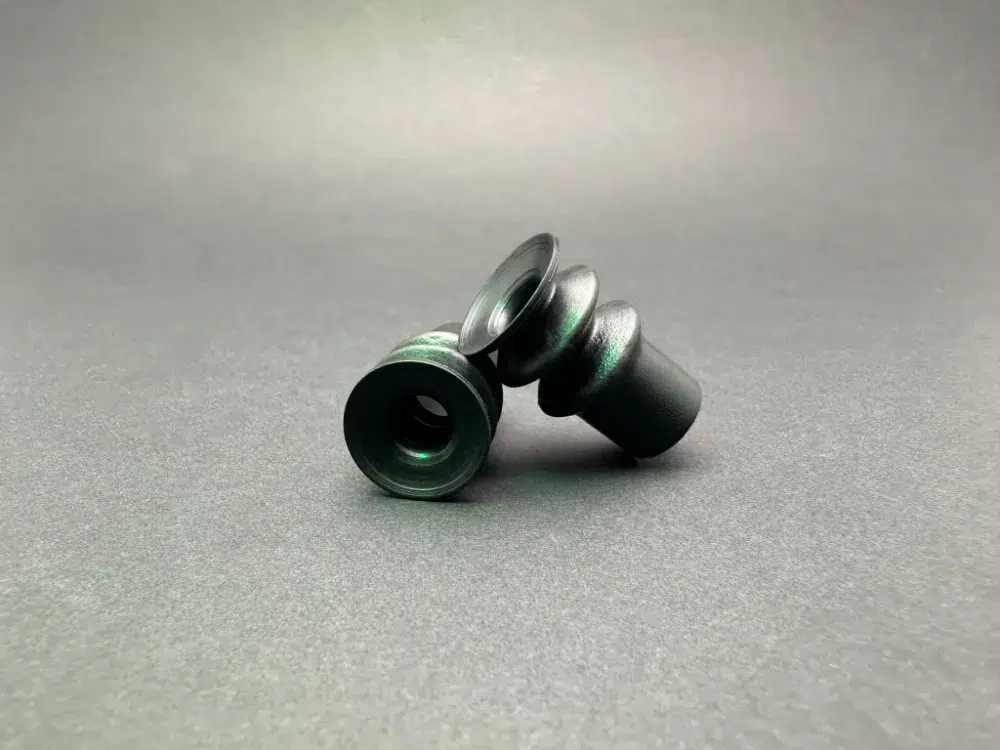
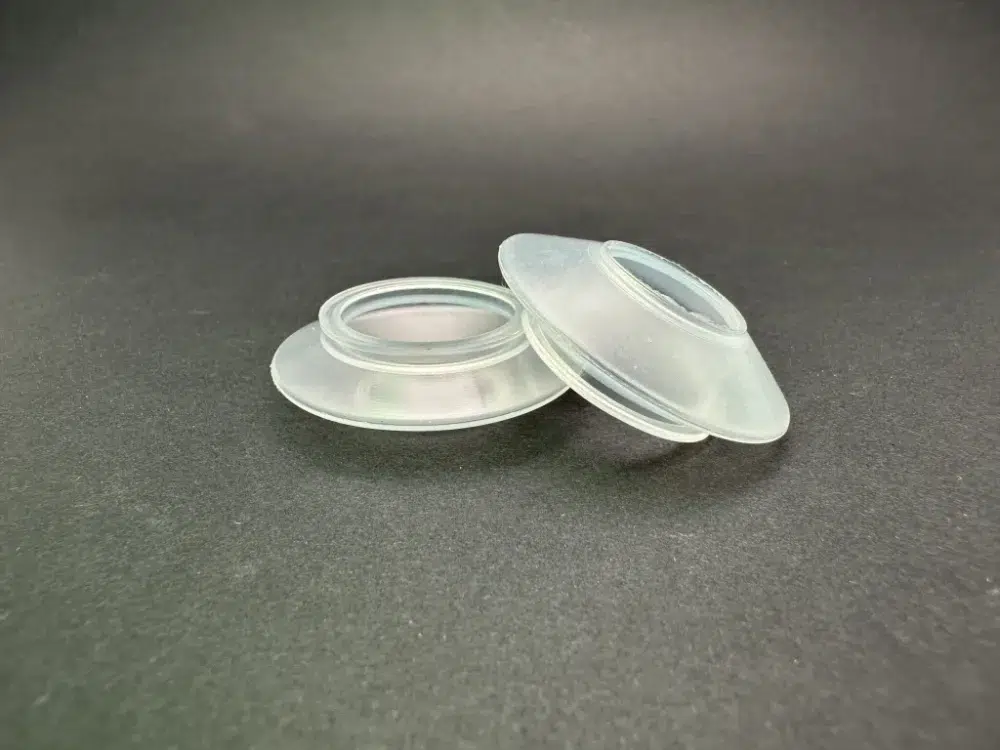
GUME manufactures molded parts made of soft rubber according to customer specifications: Seals, Membranes, Bellows, Suction cup and Rubber-Metal Composite Parts, From the prototype to the series production.
How is rubber manufactured and from what is building components produced?
Soft rubber is produced when rubber is only crosslinked in a few places during vulcanization. Long, mobile chain sections remain between two crosslinking points. These sections stretch under load and then contract again. This makes the material rubber-elastic. With sulfur vulcanization, only a few parts of sulfur are added to 100 parts of rubber. Hard rubber, on the other hand, usually contains 30 to 40 parts of sulfur and is crosslinked so tightly that the chains can no longer move. In its original sense, soft rubber is vulcanized rubber that has been sulfurized. Today, the term is used for all rubber-elastic vulcanized rubbers, including peroxidically crosslinked EPDM or platinum-crosslinked silicone. The hardness, strength, and durability of a soft rubber are determined by the formula of the rubber mixture: rubber, fillers, plasticizers, and crosslinking system.
What properties does rubber have?
Soft rubber is elastic. This means that soft rubber can deform with little force and almost immediately returns to its original shape after being relieved of pressure. This property distinguishes soft rubber from metals, thermoplastics, and elastomers. Hard rubber:
- ElasticitySoft rubber can be % stretched by 100 to 800 without tearing and returns to its original shape.
- HardnessThe hardness of soft rubber is approximately 20 to 95 Shore A and is adjusted using fillers and plasticizers.
- Volume consistency: Soft rubber changes shape under pressure, but practically does not change its volume. It deforms laterally and cannot be compressed like a foam.
- Damping: Rubber converts part of the deformation energy into heat, thereby damping vibrations and shocks.
- Time-dependent behavior: Under sustained deformation, soft rubber yields. The restoring force decreases, and after the load is relieved, residual deformation remains, which Compression set.
- Durability: Temperature, oil, ozone and chemical resistance depend on the rubber from which the soft rubber is made.
What types of rubber are there?
Elastomer is the general term for highly crosslinked polymers that behave rubber-like at room temperature. Soft rubber is the traditional term for an elastomer that is produced by vulcanizing rubber. It dates back to the time when rubber was exclusively vulcanized with sulfur, and it distinguishes the elastic material from rigid hard rubber. Therefore, soft rubber is understood to be a vulcanized elastomer based on rubber. Thermoplastic elastomers (TPE) does behave rubber-elastic, but is not vulcanized and therefore does not count as soft rubber.
The properties of a soft rubber are primarily determined by the rubber from which it is made. Soft rubber varieties are therefore named after their rubber, for example EPDM rubber or NBR rubber. The rubber determines the temperature range, media resistance and aging behavior. Hardness, color and mechanical properties are adjusted within a variety through the formulation of the mixture.
GUME processes natural rubber, SBR, EPDM, NBR, FKM and silicone, as well as other rubbers, into molded parts according to customer specifications, using the press and injection molding process and, upon request, in the Conjugated with metal. The following overview shows the common types of soft rubber with their strengths and typical applications.
| Soft rubber variety | Abbreviations | Typical strength | Typical use |
|---|---|---|---|
| Natural rubber | NR | High strength and elasticity | Suction cups, buffers, vibration dampers |
| Styrene-butadiene rubber | SBR | Resistant to wear and economical | Wear parts, wiper blades |
| Ethylene-propylene-diene rubber | EPDM | Resistant to weathering, ozone and hot water | Seals in the outdoor area, for water and steam |
| Nitrile rubber | NBR | Resistant to oils and fuels | Gaskets and membranes with oil and fuel contact |
| Chloroprene rubber | CR | Weatherproof and flame-retardant | Folded cuffs and collars for outdoor use |
| Fluoroplastic | FKM | Resistant to high temperatures and chemicals | Seals for high temperatures and aggressive media |
| Silicone rubber | VMQ | Wide temperature range | Form parts for medical technology and food contact |
Which type of rubber is suitable for a particular application depends on the operating temperature, the contact media and the required hardness. GUME advises on selection and produces samples before a molded part goes into series production.
What is the difference between soft rubber and hard rubber?
Both soft rubber and hard rubber are produced by Vulcanisation of rubber and differ in the Network density. Soft rubber is mixed with less sulfur and is therefore highly crosslinked and elastic, whereas the additional sulfur in hard rubber leads to a highly crosslinked and solid structure.
| Characteristic | Soft rubber | Hard rubber (ebonite) |
|---|---|---|
| Networking | broadly | tightly knit |
| Sulfur content in sulfur-containing compounds | few parts per 100 parts of rubber | usually 30 to 40 parts per 100 parts of rubber |
| Hardness | about 20 to 95 Shore A | about 70 to 85 Shore D |
| Behavior under load | rubber elastic, returns to its original shape | rigid, brittle |
| Elongation at break | about 100 to 800 % | few percent |
| Classification according to DIN 7724 | Elastomer | acts like a plastic |
| Typical components | Gaskets, membranes, bellows, suction cups | Sheaths, insulated parts, mouthpieces |
The name "soft rubber" does not indicate its hardness. Even an elastomer with a Shore A hardness of 90 is technically a soft rubber because it remains elastic like rubber. In everyday use, such a material is often referred to as a hard rubber. The only unambiguous indication of hardness is the Shore A number.
What is rubber used for?
Rubber is used everywhere where a component is intended to be dense, dampen, grip, or compensate for movements. This is made possible by the combination of elasticity, damping, and adaptability. After being pressed, rubber permanently presses against the opposing surface and thus seals it. It converts part of the vibrational energy into heat, adapts to rough or curved surfaces, and follows repeated movements without losing its shape. Therefore, rubber molded parts can be found in machine and plant construction, automation technology, automotive engineering, medical technology, and aerospace.
| Application | Property used |
|---|---|
| Seals and O-rings | Elastic restoring force, adapted to the sealing surface |
| Membranes and pleated bellows | High extensibility, resistance to repeated bending |
| Suction and gripper | Suaviness, tightness on the surface |
| Buffers and shock absorbers | Damping, rebound |
| Hoses and liners | Flexibility, resistance to abrasion and chemicals |
| Rubber-Metal Composite Parts | Elasticity of the rubber combined with the strength of the metal |
GUME manufactures soft rubber products, including ball vacuum cleaners, vacuum cleaner grippers with metal inserts, split bellows and rubber-steel seals.