




Customised rubber stoppers & cover caps

At GUME, you receive custom-made rubber stoppers tailor-made directly from the manufacturer, including development and design support if needed, starting from batch size 1.

Rubber plugs & cover caps according to your specifications

Rubber plugs are elastic sealing elements - usually designed as moulded rubber parts or silicone moulded parts - for securely sealing and protecting drill holes, pipe ends and housing openings in industrial applications. Rubber plugs reduce vibrations and provide reliable protection against dirt and moisture. They can also be designed as Rubber-metal connection, Rubber-plastic connection, Rubber fabric connection or as TPE moulded part.

As a rubber stopper manufacturer with 35 years of experience, we at GUME realise customised stoppers according to your customer specifications for industrial applications.

End piece for recoil absorption, custom fitting and secure seating.

Butt plate

Elastomer stoppers for snugly sealing oval openings with a secure fit and defined seal.

Oval plug

Designed for reliable closure of open geometries and functional separation of interfaces.

Sealing plugs

Conically designed plug for sealing and temporarily closing bores or openings of different diameters.

Cone plugs

These Companies trust in us

PARI logo and lettering
Customer logo of 2R: An R in red and an R in blue. An outer circle in red and blue
ASMPT_Logo

Structure of rubber stoppers / covers

At GUME, silicone stoppers and rubber stoppers are produced specifically and individually for the customer's requirements. The geometry of the stopper can be influenced by several parameters in order to find the exact solution for your challenge:

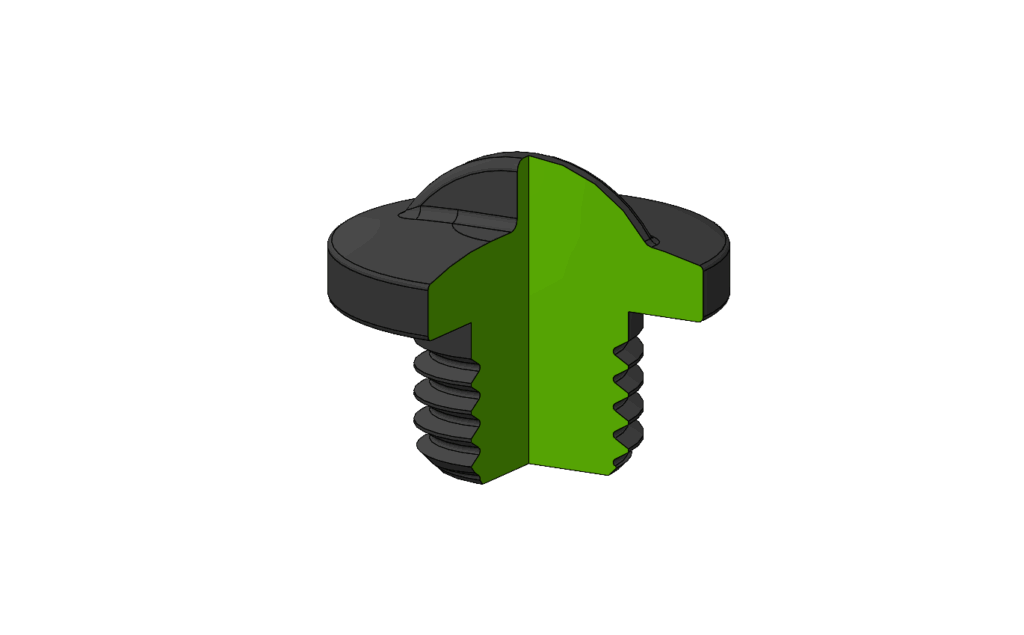
Open cross-section view of a standard stopper - GUME GmbH

Geometry of the stopper body
Depending on whether a round, oval or rectangular opening is to be sealed, the basic geometry of the stopper body is adapted accordingly. The rubber stopper is designed in such a way that it closes the opening precisely or overlaps slightly by adjusting the diameter or length and width. A tight fit ensures a tight fit and high tightness, while a looser fit with more play is used for easier installation with a lower sealing effect and lower mechanical requirements.

Outer contour of the plug body
To anchor the rubber plug in the opening, the surface is adapted with ribs, fins, and threads. Fin plugs or plugs with ribs can fold inwards, providing greater grip and sealing effect. Threaded plugs are only used when pronounced threads are to be sealed. Due to their elastic properties, conical or ribbed plugs, which can be directly fitted onto the threads, can also be used for light threads.

Plaster height (h1)

Plaster height (h1)
The more friction and sealing effect that is to be achieved, the higher the plug body is designed by the rubber stopper manufacturer. Long rubber stoppers are harder to fit, which is why the maximum length is often limited.

Height of the plug head (h2)

Height of the plug head (h2)
A higher head is often used for easier assembly and disassembly, as it offers a larger contact surface for applying tensile forces, and the silicone or rubber plug becomes easier to handle. If the rubber plug is used for aesthetic reasons, for example to conceal a screw underneath, the plug head is colour-matched to the surrounding material and chosen to be rather flat so as to be less noticeable.

Essays
For easier installation or removal, the rubber stopper manufacturer inserts a handle, a slot, a cross slot or a hexagonal opening in the stopper head.

Rubber materials for your Rubber plugs & caps

Depending on the operating environment and the requirements of your plug or cover, we will select the appropriate material for processing together with you from a variety of suitable elastomer materials.

Contact us for free material consultation for your application!

Sectors / Applications for Rubber plugs & caps

Plugs and caps are used in various industries, including mechanical and plant engineering, medical technology, aerospace, and the construction and infrastructure sector.

They are used to reliably cover, protect, and securely seal openings, connections, and sensitive areas as needed.

Plugs & Covers in Mechanical Engineering

In mechanical and plant engineering, manufacturers of rubber and silicone plugs use the components for process-reliable sealing and for protecting sensitive interfaces. Typical applications include sealing hydraulic and pneumatic connections during transport and assembly, sealing threaded holes in gear housings, or temporarily sealing cooling and lubrication channels during pressure tests. Silicone plugs are used at higher temperatures, for example in painting or drying processes, as they remain thermally stable and dimensionally accurate.

Plugs & Covers in the Medical Technology

Rubber and silicone stoppers are used for the reliable sealing of housings, cartridges, fluid channels, and sample containers. They close sterile openings on diagnostic devices, pump systems, or laboratory instruments, preventing the ingress of germs and the leakage of sensitive media. Silicone caps (VMQ/FVMQ) are suitable for autoclave, EO, or gamma processes due to their biocompatibility and sterilisation capabilities. Validated compounds, low extractability, documented traceability, and reproducible sealing function are crucial.

Plugs & Covers in the Aerospace industry

Rubber and silicone plugs are used in highly demanding technical systems, such as for protecting hydraulic connections on actuators, for temporarily sealing bores in structural components, or for sealing cable entries in avionics housings. They secure fuel lines, sensor ports, and maintenance openings during assembly, transport, and service. High-quality rubbers such as fluorosilicone or FKM compounds can also withstand kerosene, hydraulic oils, and significant temperature fluctuations. In aerospace, rubber caps and plugs with low outgassing, stable mechanical properties under vibration, and long component availability are important.

We manufacture every plug & cover geometry.
Test us!

GuME Logo
Success stories For Plugs & Covers

Iterative product development and project management

The challenge

The project with a medical technology manufacturer started at a very early concept stage on the basis of a specification sheet, but without a clear definition of the geometry and the material to be used.

Assistance

Together with the customer's development department, GUME worked out an optimal solution in an iterative process and 14 component adaptations. Due to the close coordination between internal toolmaking and elastomer production, iterations could often be implemented within the same weeks.

Solution

The rapid iteration and close interaction as a development partner ensured a high level of development reliability despite the time-critical and complex task. The development and release times were significantly reduced and a production- and therefore cost-optimised design was developed.

Do you have questions about plugs and covers?
We have answers!

While our standard deliveries typically take 8 weeks, you benefit twice over with our express option: you'll have your samples in hand in up to 2 weeks, and you can start series production in just 4 weeks. We see ourselves not just as rubber plug manufacturers, but also as development and system partners for rubber solutions. This also includes doing everything possible for our partners when it matters.

The choice of geometry depends on the installation situation and functional requirements. A cap protects bolts or threads from dirt and damage. Flat plugs seal flat boreholes flush. Handle plugs allow for frequent manual removal. Cone plugs seal conical openings flexibly. Lamellar plugs compensate for tolerances and sit securely in thin-walled tubes. Oval plugs and rectangular plugs seal profile pipes positively. Screw plugs are screwed into threads and offer high holding force. Classic closing plugs serve as a universal solution for simple, static seals without disassembly requirements. Shaft caps for rifles and tools are available in various strengths and Shore hardnesses to adjust handling individually and dampen vibrations.

The correct Shore hardness is determined by the sealing requirement, insertion force, tolerance compensation, and ease of disassembly. Softer compounds (e.g., 40–50 Shore A) conform better and seal reliably with larger tolerances, but may have lower holding forces. Harder rubber compounds (<60 Shore A) increase dimensional stability and pull-out force. The interaction between geometry, material, and the actual installation situation is crucial, ideally validated by testing. We are happy to assist you in selecting the appropriate material and testing various options for your rubber plug.

Yes, rubber stoppers can be specifically combined with metal, plastic or fabric. Metal inserts provide additional stability, plastic components enable complex geometries with greater rigidity and low weight, while fabric reinforcements increase the resistance to pressure and tearing. In this way, rubber stopper composite solutions are created that optimally combine mechanical strength, sealing effect and ease of installation - at GUME always precisely customised to your application.

The sealing effect of a rubber or silicone stopper is based on elastic compression and the resulting surface pressure between the stopper's outer contour and the bore wall. A defined interference fit creates radial compression during insertion, which is higher than the applied pressure. Geometric elements such as lamellae, sealing beads, or cone angles control the contact pressure and tolerance compensation. Material parameters like Shore hardness, Young's modulus, and compression set influence relaxation and long-term sealing. Additionally, surface roughness, lubrication condition, and temperature and media exposure are significant for permanent sealing.

Yes, rubber stoppers are suitable for food or medical applications, provided that suitable compounds are used. Conformities such as EU 1935/2004, FDA or specific medical standards are decisive, which are ensured by the use of tested raw materials and documented traceability.

You need a Stopper or a cover? We will advise you